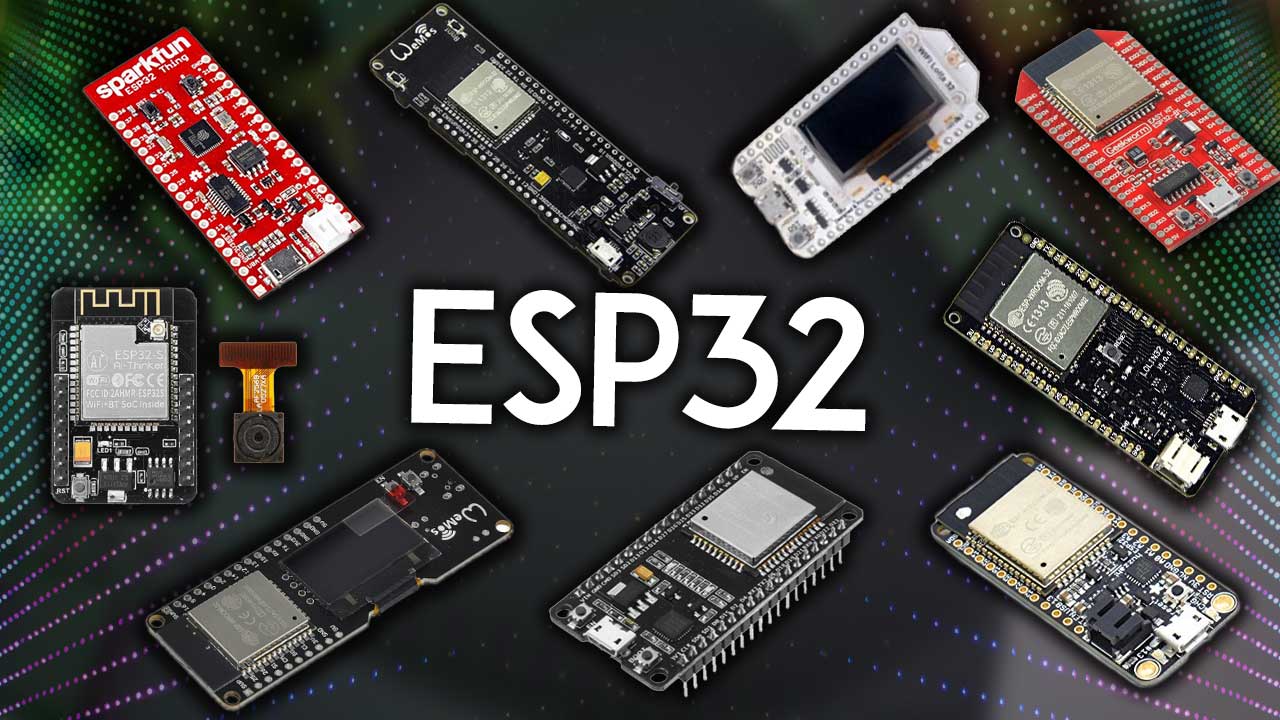
TinyML Sensor Classification on ESP32 (Offline AI)
Hardware: ESP32
AI type: TinyML – sensor data classification
Overview
This project shows how a low-cost ESP32 microcontroller can run an AI model locally to classify sensor data in real time.
The system works fully offline, without cloud services, APIs, or external servers.
The goal is to demonstrate that real AI projects are possible on extremely affordable hardware.
What you will build
ESP32 system running AI locally
Real-time classification of sensor data
Fully offline TinyML inference
Simple and reproducible setup
Required hardware
Software requirements
Project architecture
ESP32 reads raw sensor data
Data is passed to a TinyML model
Model runs inference locally
Classification result is produced instantly
All processing happens on the ESP32.
Installation steps
Install Arduino IDE
Add ESP32 board support in Board Manager
Install required libraries
Connect the IMU sensor to ESP32
Upload the code
#include <Arduino.h>
float input_data[6];
int prediction = -1;
void setup() {
Serial.begin(115200);
Serial.println("TinyML sensor classification started");
}
void readSensor(float *data) {
data[0] = random(-100, 100) / 100.0;
data[1] = random(-100, 100) / 100.0;
data[2] = random(-100, 100) / 100.0;
data[3] = random(-100, 100) / 100.0;
data[4] = random(-100, 100) / 100.0;
data[5] = random(-100, 100) / 100.0;
}
int runInference(float *data) {
if (data[0] > 0.5) return 1;
if (data[0] < -0.5) return 2;
return 0;
}
void loop() {
readSensor(input_data);
prediction = runInference(input_data);
Serial.print("Prediction: ");
Serial.println(prediction);
delay(200);
}
How it works
The ESP32 continuously reads sensor values and feeds them into a lightweight AI model.
The model outputs a class label based on learned patterns.
Even though this example uses simplified logic, the same structure applies to real TinyML models exported from Edge Impulse or TensorFlow Lite Micro.
Practical applications
Motion pattern recognition
Anomaly detection in machines
Smart triggers for IoT devices
Low-power autonomous sensors
Limitations
Limited memory for large models
Requires careful feature selection
Lower accuracy compared to large cloud models
These limitations are part of embedded AI engineering.
Conclusion
This project proves that AI does not require expensive hardware or cloud infrastructure.
With ESP32 and TinyML, useful intelligent systems can be built entirely offline and at very low cost.
AI without millions is not theory — it is practical engineering.